04.05.2023
The potential of PALOP’s cultural representation in the comic book space
Culture shapes our perception of the world, the way we move in society, the choices we make on a daily basis, and we are somehow heirs to the practices and ideas of the communities where we were formed as individuals.
As we try to become part of the global landscape, the importance of representing our own culture has never been clearer. We can feel this urgency particularly here on the African continent, where artists and cultural agents have been increasingly engaged in rescuing stories from oral tradition and ancestral practices that are otherwise in danger of disappearing.
Comics have the potential to give voice to marginalized communities and traditions. Through its fictional narratives, those who feel unheard are given space to deliver culturally relevant messages to a wide audience. The visual component further increases its scope, reaching audiences of different ages and academic levels, which makes comics a valuable format to rescue the cultural heritage of the PALOP.
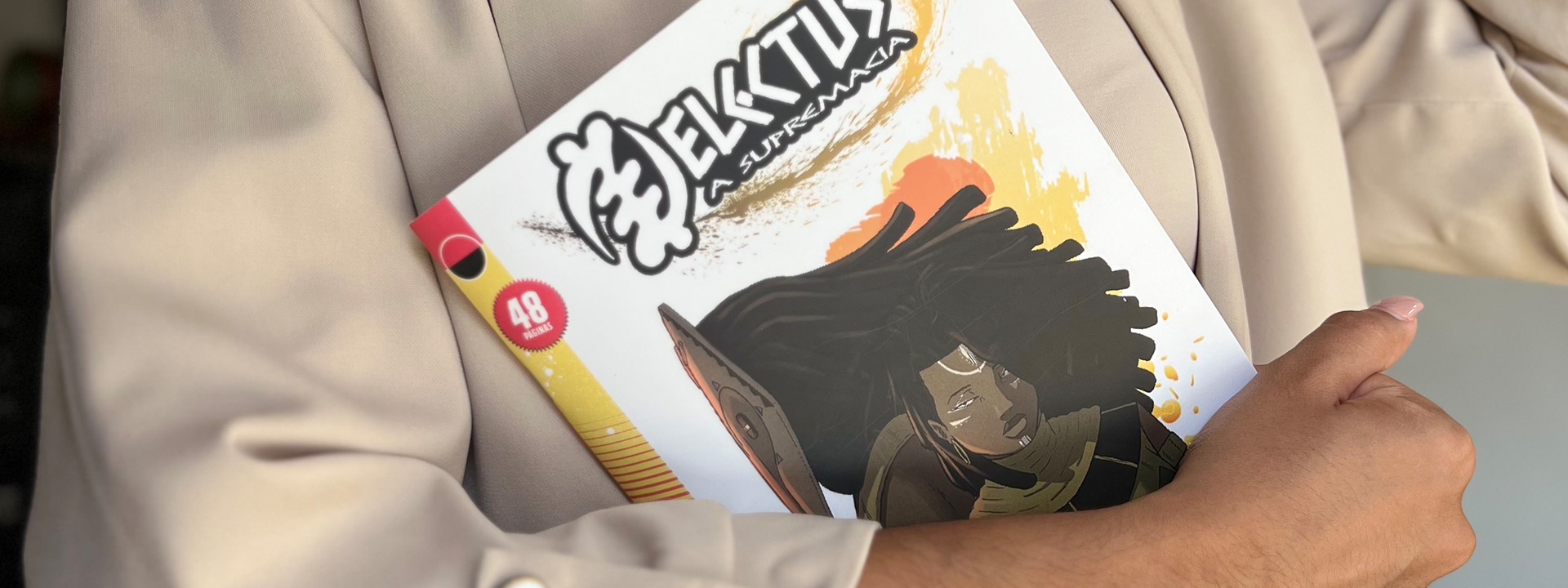
In the first BDPALOP contest, the winning artists developed historical, urban, fantastic, and science fiction narratives. In the historical narratives, themes such as wars, invasions and slavery were chosen, and the cultural element was the way we preserve, even in times of great difficulty, solidarity and community spirit. The same happens when we talk about the urban reality of, for instance, Maputo, in which the city dwellers’ ability to “adapt”, the adventures, the precarious situations, and the scarcity strengthen the bond between the characters. Healing, orixás, and magic are a constant in the stories of this first contest, showing the importance of preserving our connection with our ancestry and breaking with the progress vs. tradition binomial, recognizing that we can walk side by side, connected to African culture, as beings of these times.
After countless comic book stories have been told by the USA, Europe and Asia, it is important to ensure that our stories are also represented and reach readers in a quality format, following the demanding standards of the global market, and making PALOP readers demand more quality in the publications that reach them as well. This is the first step in the PALOP to establish a comprehensive comic book market for Portuguese-speaking readers, which will bring new opportunities for local artists to promote their work. With each issue, nine writers and nine illustrators leave trained with the tools to unleash their talent. It is an inspiration for the countries where they live. An inspiration for the entire African continent. For the global comics market.
04.05.2023
The comic book market in Brazil
The Brazilian comic book industry is known for its rich history and iconic characters such as Mônica or Cebolinha from “A Turma da Mônica”, Zé Carioca, O Menino Maluquinho, Capitão 7 and Níquel Náusia. In recent years, the industry has seen an increase in interest and creativity from artists from Portuguese-speaking African countries (PALOP), and market-connecting initiatives are emerging, such as BDPALOP. This paradigm shift has been reflected in the biggest comic book events in Brazil, such as Comic Con Experience, the Festival Internacional de Quadrinhos (International Comics Festival) (FIQ), the Bienal Internacional do Livro de São Paulo (São Paulo International Biennial of the Book), the HQ Mix Trophy, and the Graphic MSP.
One of the most significant events of the comic book scene in Brazil is Comic Con Experience (CCXP), which has become the largest comic book convention in the country since its creation in 2014. The event attracts thousands of attendees from all over Brazil and the world and provides an excellent opportunity for artists from the PALOP to showcase their work and network with industry professionals.
Another event that has gained considerable prominence is the Festival Internacional de Quadrinhos (FIQ), held every two years in Belo Horizonte. The FIQ is one of the largest comic book festivals in Brazil, attracting national and international guests. The festival offers a platform for artists from PALOP countries to show their work, participate in workshops and lectures, and enter competitions.
The Bienal Internacional do Livro de São Paulo is another major cultural event in Brazil that offers a section dedicated to comics and graphic novels. Although not exclusively focused on comics, the event brings together publishers, authors and readers from all over Brazil and the world. Artists from the PALOP have the opportunity to show their work and make contacts with industry professionals, potentially leading to new opportunities and collaborations.
The HQ Mix Trophy is considered the most important award in the Brazilian comics industry, recognizing the best of Brazilian comics, since 1989. Artists from the PALOP can submit their work for consideration, potentially receiving recognition and visibility for their work.
The Graphic MSP project invites Brazilian comic creators to reinterpret iconic characters from the Maurício de Sousa Produções studio in their own styles. The project has resulted in numerous critically acclaimed graphic novels, with works by creators such as Danilo Beyruth.
The comic book scene in Brazil offers several opportunities for artists from the PALOP to create partnerships and globalize their works. By participating in events such as Comic Con Experience, the International Comics Festival (FIQ), the São Paulo International Book Biennial, the HQ Mix Trophy, and the Graphic MSP, these artists can contribute to creating a wider and more diverse market for comics written in Portuguese.
28.01.2023
The experience of the selected artists in the first edition of BDPalop
It took months of hard work and sleepless nights for the artists selected in the first BDPALOP contest (2021) to put all their dedication and creative energy into each page of their comic books. Now that the nine publications have gone through the printing presses, acquiring sharp strokes and vivid colors, they are about to hit the shelves of several bookstores in Angola, Cape Verde, Mozambique, Portugal and Brazil, taking significant steps to integrate, in the Portuguese-speaking market, the comics made in the PALOP.
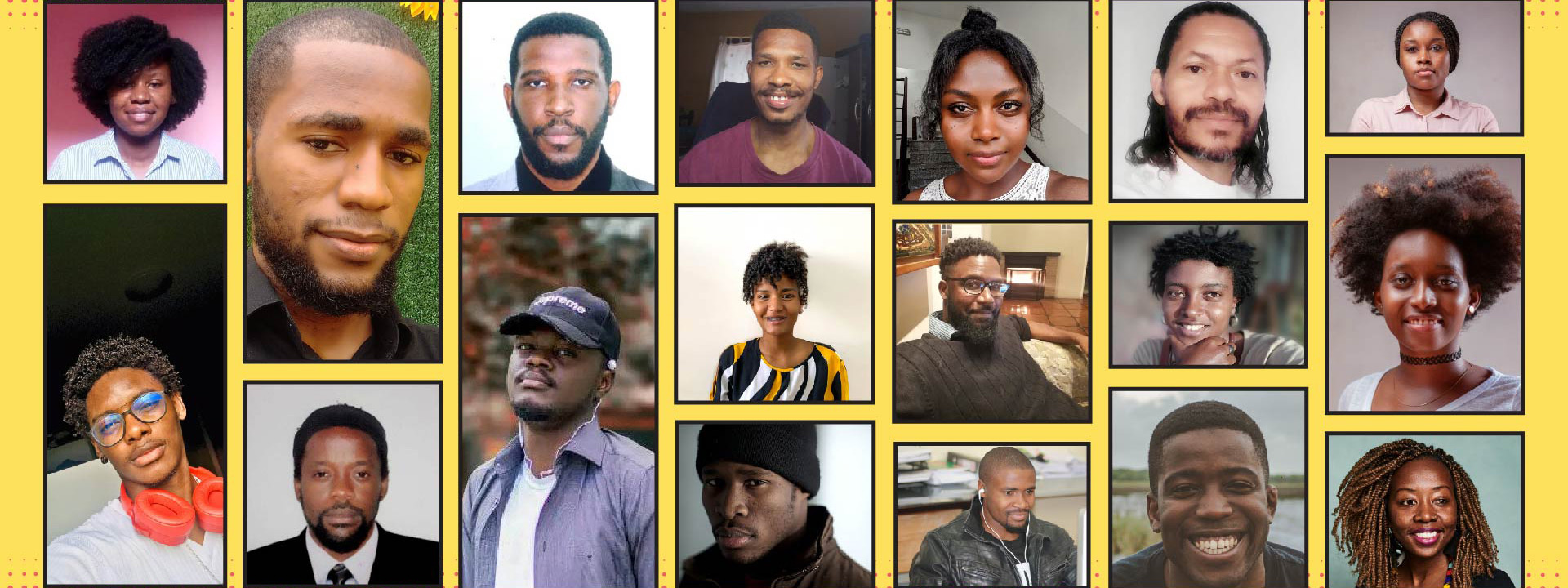
Now that the works of the first contest are about to hit the bookstores, we thought it was time to interview the selected beneficiaries and find out what motivates them to create comics and how their creative process went throughout this contest. The beneficiaries of this first edition include Keila Pereira and Wilson Lopes, Domingos Silva and Coralie Silva, Edna Tavares and Heguinil Mendes, from Cape Verde, Luís Mateus and Simão Kusanica, Danilson Rodrigues and Nick Agostinho, Florinda Sakamanda and Hélder Simões, from Angola, Luís Ofice and Rajau de Carvalho, Darling Catar and Trisha Mamba, Eliana N’Zualo and Ique Langa, from Mozambique, having participated in the initiative as illustrators or screenwriters.
In the context of BDPALOP, Trisha Mamba, from Mozambique, reports that her perception of what it is to be an artist changed as she got more training opportunities and with her participation in BDPALOP: “For me, anyone who worked with illustration was an artist who sold paintings on the street, that’s what I thought, I never even saw it as an career I could pursue, until recently, about two, three years ago. […] I, for instance, already have a notion of how I can work with comics, how I can make a living out of comics. That means that if comics are going to be created locally, then there will be a representation of the stories, people will read more, the market will be richer, people will feel more identified, we will have more local stories illustrated, something that doesn’t exist at the moment.”
BDPALOP held master classes administered by comic book professionals in the fields of illustration, screenwriting, pagination, coloring, final art, and others, being one of the activities considered most relevant for the beneficiaries to establish themselves in area of arts and culture. Nick Agostinho, one of the Angolan beneficiaries, tells us about the impact the classes had on him as an artist, “At the beginning of the training, I was like ‘I don’t need training’. But even the fonts that you write in, I figured out which ones are contemporary and compelling. The angles of the images, I didn’t think about that. I learned to see beyond myself, I could no longer see myself as the owner of the work, I had to put myself in the place of the reader. The BDPALOP master classes were very, very important for me.” Now Simão Kusanica can make his work reach even further: “My goal is to really be a professional artist, to be able to reach a larger, international audience, you know? To be able to publish my stories in other countries, to make the national flag reach further, those are my goals as an artist”.
Coralie, from Cape Verde, told us that although there are comic contests in the country, they are not at the professional level of BDPALOP, adding that “BDPALOP will inspire new designers, it will make them wake up and want to do something innovative. It is a great opportunity to make my comics known in other countries and to reach more children with my stories, for me it is a dream come true”.
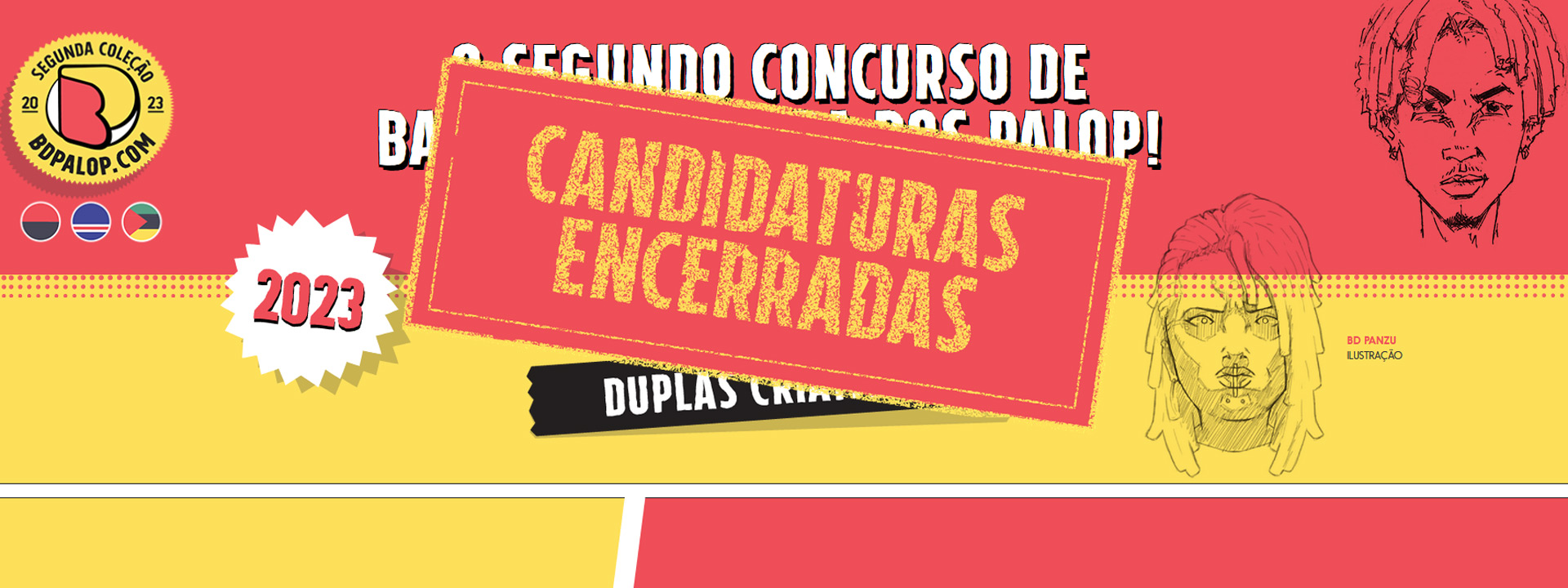
The second BDPALOP contest closed on April 17th for the jury to evaluate the applications, as usual from Mozambique, Angola and Cape Verde. The team received projects from creative duos and encouraged the participation of women who illustrate and write comics or have experience in similar areas. At a date yet to be announced, the results will be shared and the creative process of the nine selected artists will begin again, with mentoring and master classes during the creation of their works, in addition to the stipulated financial support. Year after year, we will see the shelves of more bookstores in the Lusophone world welcoming the BDPALOP collections, the long-term sustainability path traced by the initiative.
25.01.2023
Applications closed to evaluate the proposed works!
BDPALOP has now closed its applications for its second grant for comic book creation contest. A total of 33 applications were received from Angola, Mozambique and Cape Verde. We are proud to be able to stir up comic book creation in the PALOP. We hope that our efforts will encourage more artists to become professional writers and illustrators and join forces to build a comic book market in the Portuguese speaking countries. The next step is the evaluation of the applications by the jury. The results will be announced by April 30th at www.bdpalop.com and in the project’s social media channels. See you soon. Spread the word!

24.01.2023
First BDPALOP edition showcases
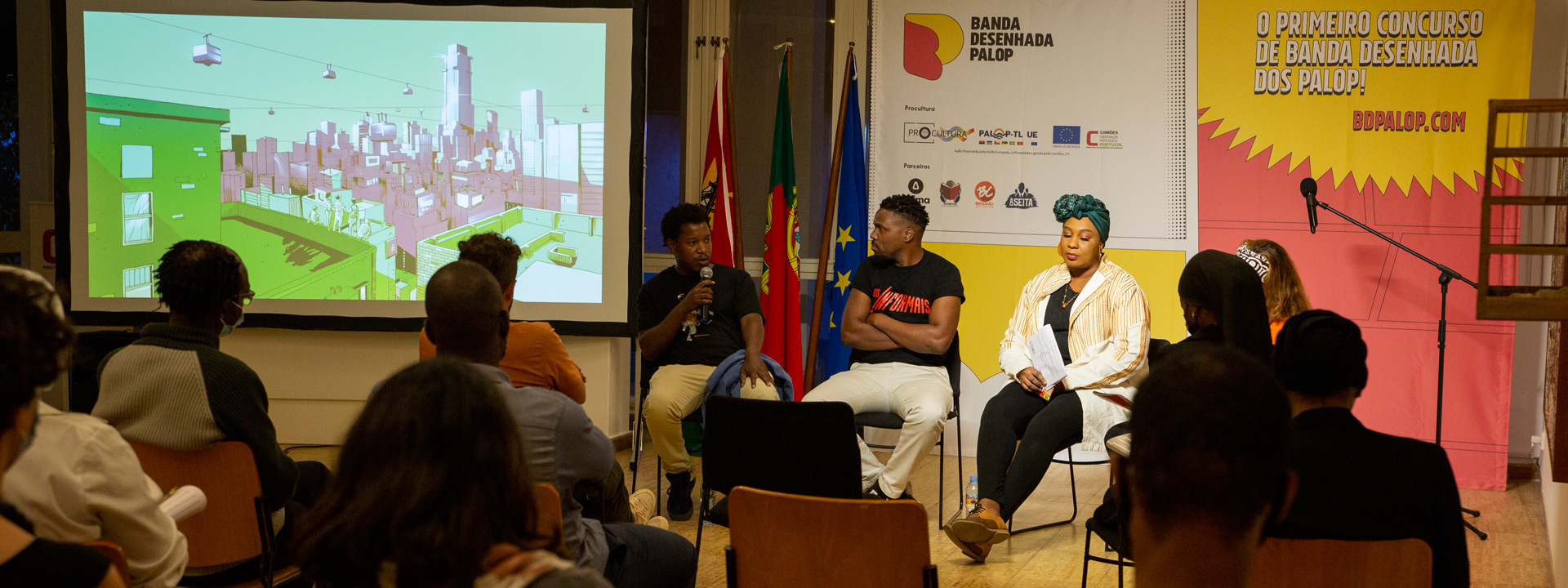
The first showcases of BDPALOP are about to take place, on May 11th, at Camões – Portuguese Cultural Center in Maputo, Luanda and Praia. Its purpose is to create bridges and dialogue between young artists and cultural agents from the PALOP. During the exhibitions, the nine comic books produced in the first contest by creative duos from Mozambique, Angola and Cape Verde, will be presented. The programming will be filled with activities with the initiative staff, the beneficiaries, exhibitions with illustrations by the authors and, in Maputo, a Storytelling and Illustration workshop will be held for all comic book lovers.
This is the schedule for each showcase:
- Maputo, Moçambique: May 11th, from 15h to 19h30 (local time)
- Luanda, Angola: May 11th, from 16h to 18h (local time)
- Cidade da Praia, Cape Verde: May 11th, from 17h to 19h (local time)
At the showcase, the public will be able to watch conversations and exchange ideas with the beneficiaries, learning more about their artistic careers and their experience with BDPALOP. Publications from the first contest will be available for purchase at the event, and points of sale will be announced in the three countries involved, as well as in Portugal and Brazil.
Every comic book lover is invited to participate in BDPALOP’s official showcases.